
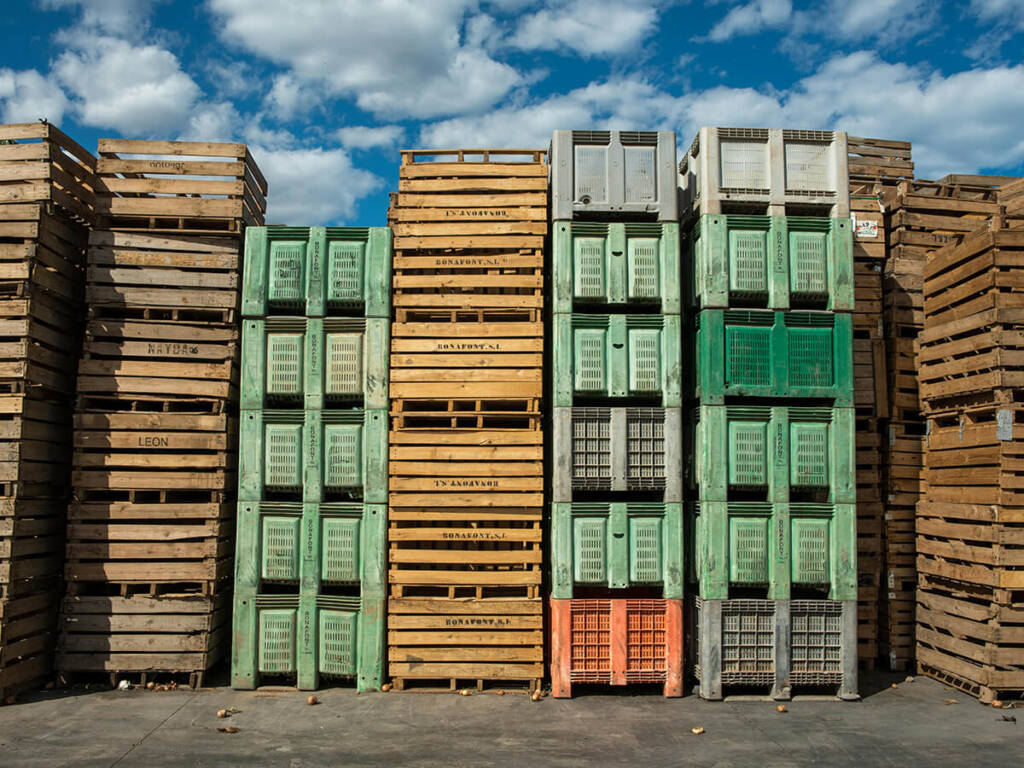
In the bustling world of logistics and supply chain management, the humble wooden pallet is an unsung hero. It’s the foundation upon which global trade is built, facilitating the movement of virtually every product imaginable. Yet, for many businesses, pallets are an afterthought—a simple operational necessity rather than a strategic asset. This oversight can be costly. Inefficient pallet management can lead to inflated shipping expenses, operational bottlenecks, damaged goods, and unnecessary waste.
Conversely, implementing a strategic pallet management program can unlock substantial financial and operational benefits. By viewing pallets as a critical component of your supply chain, you can significantly reduce shipping costs, enhance workflow efficiency, minimize product loss, and improve your company’s bottom line. This article explores how a thoughtful approach to pallet management can transform your logistics operations from a cost center into a competitive advantage.
What Is the Direct Impact on Shipping Costs?
The most immediate way proper pallet management affects your budget is through direct shipping costs. Freight charges are often calculated based on weight and volume, and your choice of pallet plays a crucial role in both.
Optimizing Weight and Size
Every kilogram counts in shipping. The total weight of a shipment directly influences fuel consumption and, consequently, freight charges, especially in air and LTL (less-than-truckload) shipping. While standard wooden pallets are robust, their weight can vary. Using pallets that are heavier than necessary adds dead weight to every shipment, accumulating into significant, unnecessary costs over thousands of loads.
A strategic pallet program involves selecting the right pallet for the right job. This might mean using lighter-weight, custom-designed pallets for air freight or for products that don’t require the heavy-duty capacity of a standard GMA (Grocery Manufacturers’ Association) pallet. A reliable pallet supplier can help you analyze your product specifications and shipping methods to recommend the most cost-effective pallet design, ensuring you aren’t paying to ship excess wood.
Furthermore, standardizing pallet sizes across your operations is key to maximizing space utilization. A full truckload (FTL) has a fixed volume. Using uniform pallets allows for tighter, more stable stacking patterns, ensuring you use every cubic meter of available space. This efficiency can reduce the total number of shipments required to move your inventory, leading to dramatic savings in transportation costs. For businesses operating in major logistics hubs, having a consistent supply of standard and custom pallets from a local source, such as us at Woodbridge Pallet for pallets in Woodbridge, is essential for maintaining this level of optimization.
Heat Treatment and International Compliance
Pallets that are used for international shipping are required to comply with ISPM 15 (International Standards for Phytosanitary Measures No. 15) regulations, which require heat treatment or fumigation to prevent the spread of pests. Non-compliance can result in your entire shipment being quarantined, returned, or even destroyed at the border—a disastrous and expensive outcome. A proper pallet management system ensures that all pallets used for export are correctly treated and stamped, eliminating the risk of costly customs delays and penalties. Partnering with a knowledgeable supplier guarantees that your pallets meet all international standards, securing a smooth journey for your goods across borders.
Enhancing Operational Efficiency, Saving Time and Labor

Beyond direct shipping fees, pallet management has a profound impact on the day-to-day efficiency of your warehouse and distribution centers. Time is money, and a streamlined pallet system saves both.
Accelerating Loading and Unloading
The quality and consistency of your pallets directly affect how quickly and safely your team can move products. Poor-quality pallets with broken boards, protruding nails, or inconsistent dimensions can cause significant slowdowns. Forklifts and pallet jacks can snag on damaged wood, leading to difficult maneuvers and increased handling time. Workers may have to spend extra time re-stacking unstable loads or sorting through a pile of subpar pallets to find a usable one.
In contrast, a well-managed inventory of high-quality, uniform pallets ensures smooth and rapid operations. Pallets are readily available where and when they are needed, and their structural integrity allows for quick, safe handling by machinery. This consistency reduces loading and unloading times, which not only lowers labour costs but also improves truck turnaround times, a critical metric in busy distribution centers. Faster turnaround can help avoid detention fees charged by carriers for keeping their drivers waiting. An effective pallet program is a core component of learning how to save operational costs with wooden pallets by creating a more predictable and efficient workflow.
Pallet Pooling and Repair Programs
Managing your own pallet inventory can be a logistical challenge. It requires space for storage, labor for sorting and handling, and a system for disposal or repair. This is where pallet management services like pallet pooling or a dedicated repair and return program come in.
- Pallet pooling. In a pooling system, you rent pallets from a third-party provider who manages the entire lifecycle of the pallet, from delivery to retrieval and maintenance. This eliminates the need for you to purchase and manage your own pallet inventory, freeing up capital and reducing administrative overhead.
- Repair and return programs. For companies that own their pallets, a repair program is an excellent way to extend the life of your assets and reduce waste. Instead of discarding damaged pallets, they can be repaired to their original specifications and returned to service. This is significantly more cost-effective and environmentally friendly than constantly purchasing new ones. A reliable pallet supplier in Woodbridge can often provide comprehensive repair services, helping you maintain a high-quality pallet fleet without the capital expenditure of new purchases.
How to Minimize Product Damage to Protect Your Assets
One of the most underestimated costs in the supply chain is product damage. Every item that is broken, crushed, or contaminated during transit or storage represents a direct loss of revenue, plus the additional costs of returns, replacements, and dissatisfied customers. The pallet is your first line of defense against this loss.
A pallet’s primary function is to provide a stable, protective platform for your goods. A low-quality or damaged pallet compromises this function entirely. A single broken deck board can lead to a collapsed stack of products, while a weak block can cause an entire unit load to tip over during transport. The resulting damage can be catastrophic, often destroying not just one case but an entire pallet’s worth of inventory.
Investing in high-quality, durable pallets is a form of insurance for your products. A well-constructed pallet can withstand the rigours of handling and transportation, absorbing shocks and vibrations that would otherwise be transferred to your goods. Implementing a strict quality control system as part of your pallet management program—where incoming pallets are inspected and damaged ones are immediately removed from circulation for repair or recycling—is critical. This ensures that only structurally sound pallets are used, drastically reducing the risk of load failure and product damage. This proactive approach saves money not only by preventing direct product loss but also by reducing insurance claims and preserving your brand’s reputation for quality and reliability.
A Complete Pallet Management Program
To truly harness these benefits, businesses should move beyond ad-hoc pallet purchasing and implement a comprehensive management program. Such a program integrates procurement, tracking, repair, and recycling into a single, cohesive strategy.

A robust program provides total visibility into your pallet inventory, or “pallet pool.” Using tracking systems, you can monitor the flow of pallets throughout your supply chain, identifying where they are, how many are in circulation, and how many are lost or damaged. This data is invaluable for forecasting future needs, preventing pallet theft, and holding supply chain partners accountable for pallet returns.
Furthermore, a comprehensive program incorporates sustainability through robust repair and recycling initiatives. Wood is a renewable resource, and wooden pallets are highly repairable and recyclable. An effective program ensures that damaged pallets are sorted for repair whenever possible. Those beyond repair can be dismantled, with their components reused or ground into mulch, animal bedding, or biofuel. This “circular economy” approach not only reduces your environmental footprint but also generates cost savings by minimizing waste disposal fees and reducing the need for new pallets.
Your Next Step to Efficiency and Savings
The evidence is clear: proper pallet management is not an operational expense but a strategic investment. By optimizing the selection, use, and lifecycle of your pallets, you can achieve significant reductions in shipping costs, dramatic improvements in operational efficiency, and better protection for your valuable products. Moving from a reactive to a proactive pallet strategy is a powerful lever for enhancing your company’s profitability and competitive edge.
If you’re ready to transform your pallet logistics and unlock these benefits for your business, the experts at Woodbridge Pallet Ltd. are here to help. They can assist you in designing a custom pallet management program tailored to your specific needs.
Contact Woodbridge Pallet Ltd. today to learn more at info@woodbridgepallet.com or call them at 1-800-361-7798.