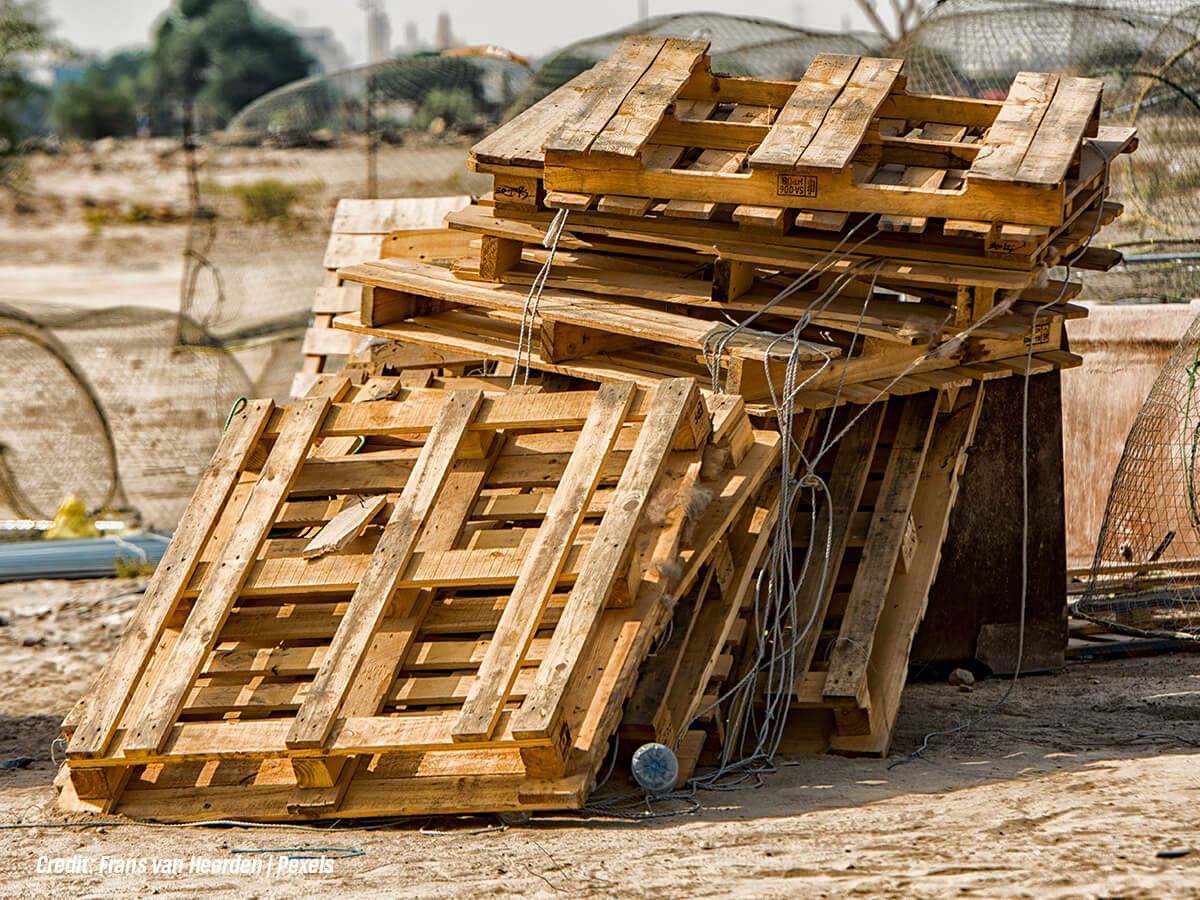
Quick Answer: Businesses reduce supply chain waste by abandoning single-use shipping packaging and adopting a closed-loop system. Refurbished shipping bases deliver identical structural integrity to brand-new lumber while diverting thousands of tonnes of industrial debris from Canadian landfills. This sustainable approach drastically lowers procurement costs, reduces carbon emissions, and transforms end-of-life timber into valuable biomass fuel.
Every hour, Canadian distribution centres hemorrhage capital by treating structural packaging as garbage. Tossing a wooden shipping base into a landfill after a single trip across the Trans-Canada Highway is a catastrophic financial and environmental failure. Modern logistics networks are suffocating under the weight of their own industrial waste, facing steep disposal fees and aggressive corporate sustainability mandates.
The solution is not a complicated synthetic material; the answer lies in rethinking how the supply chain handles its most abundant physical asset. Adopting a recycled wood infrastructure instantly halts the linear waste stream, turning a disposable expense into a permanent asset.
Why Is the Traditional Supply Chain Model Broken?
The traditional “take, make, and dispose” model is mathematically and environmentally unsustainable. When operations constantly purchase freshly milled lumber only to discard it upon delivery, they create a perpetual deficit.
This linear approach ignores the inherent durability of industrial timber and artificially inflates overhead costs. Operations that refuse to adapt are effectively burning their own capital while heavily degrading the local environment.
- Escalating Disposal Fees: Canadian municipalities are aggressively increasing landfill tipping fees to deter industrial dumping. Every tonne of discarded wood directly erodes corporate profit margins. Paying a waste management company to haul away a highly repairable asset is a fundamental logistics failure that drains operational budgets.
- Greenhouse Gas Emissions: When timber rots in an oxygen-deprived landfill, it releases methane, a potent greenhouse gas that accelerates climate change. Discarding wood directly contradicts modern carbon-neutral initiatives and strict environmental goals expected by Canadian consumers and regulatory bodies.
- Supply Chain Volatility: Relying exclusively on new lumber ties an operation to the highly volatile commodities market. When raw material costs spike due to forestry shortages, labour strikes, or border tariffs, packaging budgets spiral out of control. Recycled stock provides a buffer against unpredictable market swings, ensuring price stability.
How Do Refurbished Platforms Power a Circular Economy?
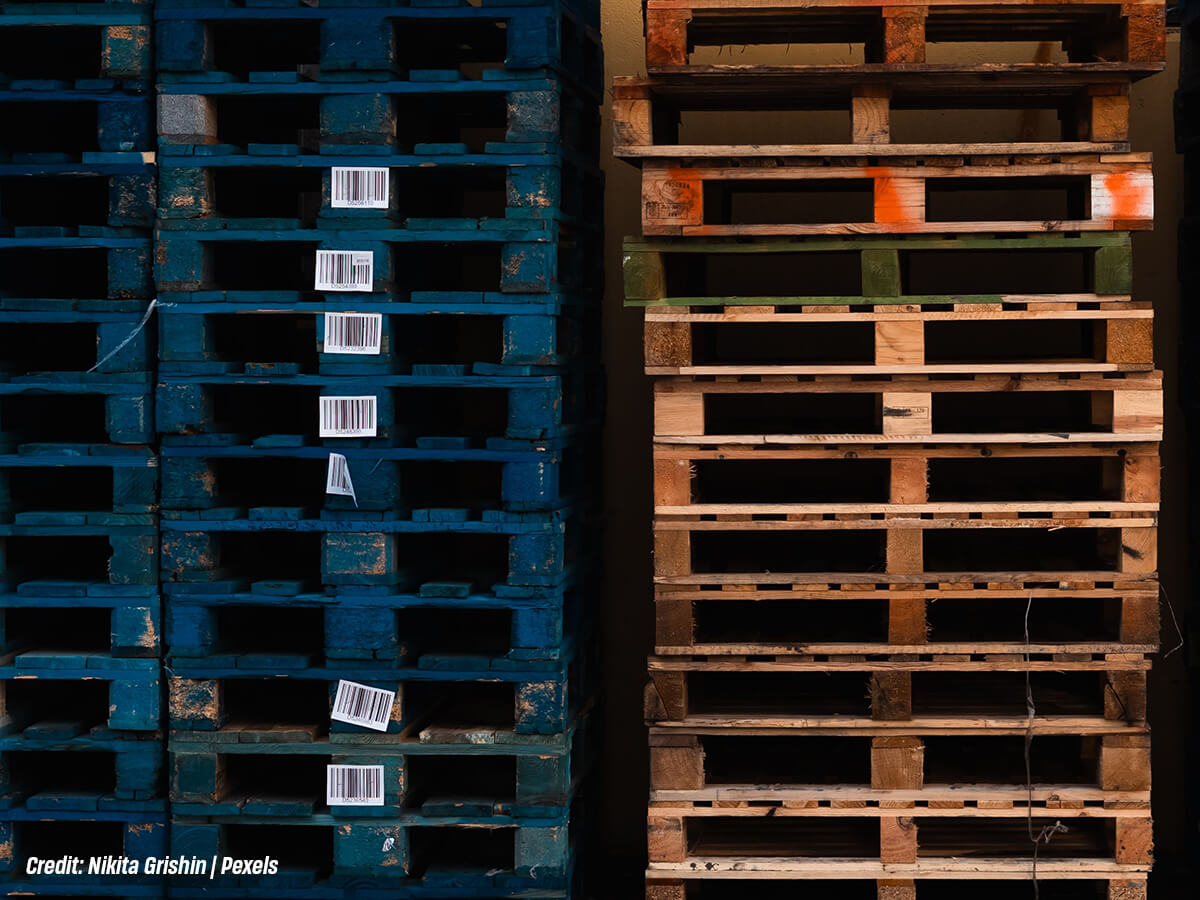
Recycling wood changes the fundamental trajectory of industrial logistics. Instead of a dead end at the receiving dock, a broken deck board merely signals a standard maintenance cycle. This creates a circular economy where materials are kept in constant, productive use, drastically lowering the overall demand for virgin timber harvesting across Canadian forests.
According to research, the recycling rate for wooden pallets stands at a staggering 95 percent, proving their viability as the ultimate sustainable packaging solution. This phenomenal recovery rate is achieved through strict industrial reclamation programs.
- Closed-Loop Pooling: Forward-thinking facilities gather empty platforms and send them back to sorting centres rather than tossing them in a dumpster. This continuous loop keeps high-quality timber actively moving through the supply chain.
- Precision Component Replacement: A snapped stringer does not ruin the entire unit. Trained technicians simply remove the damaged segment and insert a fresh cut of lumber. This surgical repair process requires minimal energy and labour compared to manufacturing a platform completely from scratch.
- Lifecycle Extension: A properly maintained unit will survive dozens of heavy-duty trips across the country. By constantly rotating and repairing stock, businesses maximize the return on every single centimetre of wood purchased, stretching their logistics budget significantly further.
Can Reconditioned Wood Handle Heavy Industrial Loads?
A common misconception plagues the logistics industry: the false belief that used wood is inherently weak. In reality, professionally refurbished platforms undergo rigorous structural grading systems to guarantee absolute performance under heavy stress. Quality control is important in the refurbishing process to prevent transit failures.
By sourcing a premium recycled pallet in Mississauga, logistics managers secure a product that has been meticulously inspected, repaired, and tested for maximum load capacity. Reconditioned units are completely capable of handling the heavy demands of modern automation without sacrificing structural integrity.
- Strict Grading Standards: Refurbished units are sorted into specific grades (such as Grade A or Grade B) based on their structural condition and cosmetic appearance. This categorization ensures a facility only receives platforms perfectly matched to specific weight requirements.
- Metric Precision for Automation: Robotic palletizers and high-speed conveyors demand exact dimensions. Reputable suppliers ensure that replacement boards match the original specifications down to the exact millimetre. This guarantees that repaired units flow seamlessly through automated laser-guided systems without triggering sensor faults or causing expensive conveyor jams.
- Climate Resilience: Seasoned wood often holds its shape far better than freshly cut, green lumber. Aged timber has already adapted to ambient moisture levels, meaning it is significantly less likely to warp, shrink, or pop metal fasteners when exposed to freezing temperatures in unheated Canadian distribution centres.
What Happens When the Wood Finally Reaches its Limit?
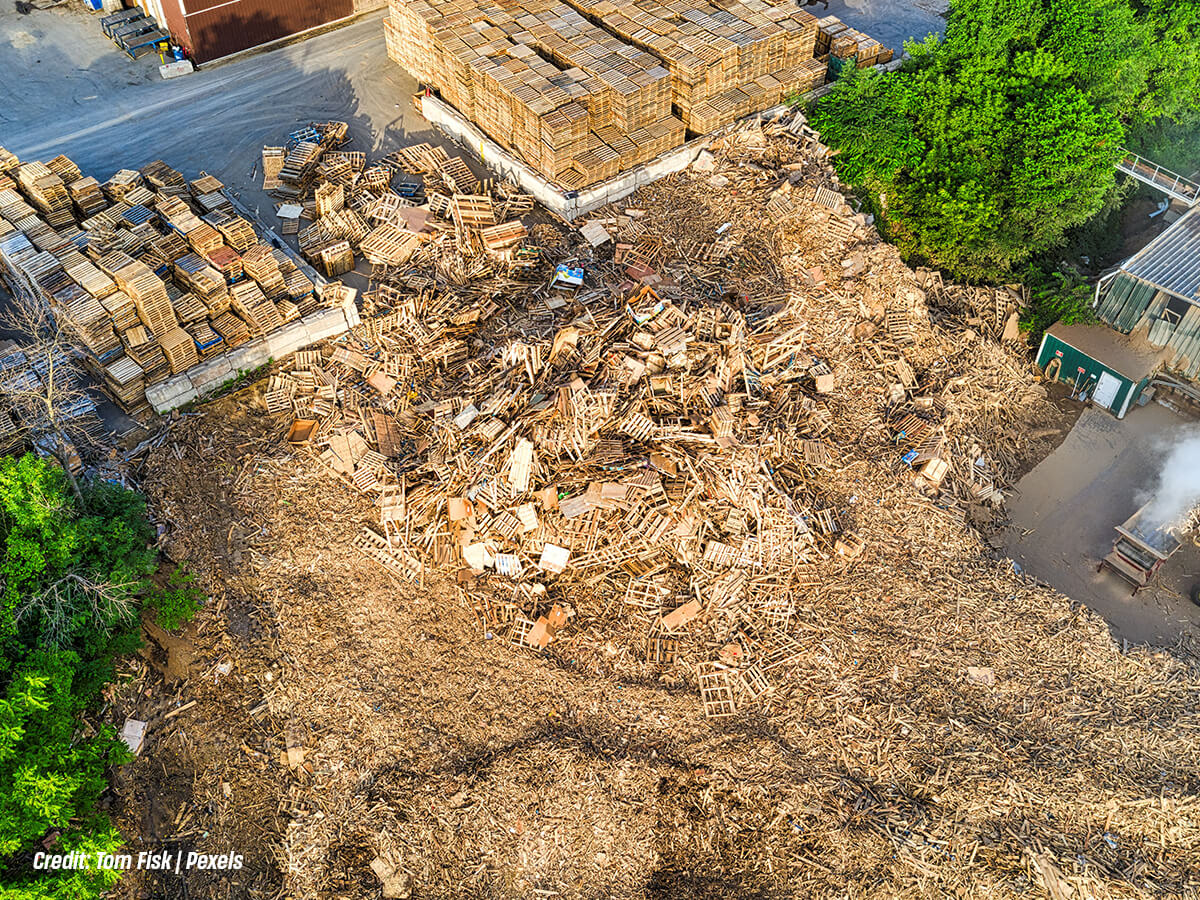
Even the most durable hardwood eventually splinters beyond structural repair after years of industrial use. However, in a truly sustainable waste-reduction program, end-of-life does not mean sending remnants to a dump. Zero waste actually means zero waste, ensuring maximum utility.
- Biomass Conversion: Unusable timber is fed through massive industrial grinders. The resulting wood chips are sold as biomass fuel, providing a reliable, carbon-neutral energy source for industrial heating systems.
- Landscape and Agricultural Mulch: The shredded wood can also be dyed and repurposed for commercial landscaping projects or safe agricultural animal bedding. This ensures every final fibre serves a practical purpose.
- Zero Toxic Leaching: Unlike synthetic plastic shipping platforms that eventually degrade into harmful microplastics, natural timber decomposes safely without leaching toxic chemicals into the Canadian soil or local water tables.
Drive Sustainable Logistics Today
Companies must stop throwing away profits and immediately invest in sustainable infrastructure. Shifting to a recycled model eliminates disposal fees, protects the environment, and guarantees that freight continues moving without interruption. High-performance logistics require smart, resilient, and environmentally responsible packaging choices.
To build a greener, highly efficient supply chain, partner with a leading pallet supplier in Mississauga. Secure the exact dimensions and durability required for rigorous industrial handling while actively supporting a zero-waste future.
Contact Woodbridge Pallet immediately. Call us at 1-800-361-7798 to upgrade your logistics network.