Key Takeaways
- Damaged wood pallets cause significant delays during loading operations by jamming automated equipment and disrupting forklift handling.
- Broken structural components reduce pallet weight capacity, leading to sudden product collapses and severe inventory losses.
- Projecting nails, splinters, and cracked stringers pose severe physical hazards to warehouse personnel, increasing workplace injury rates.
- Regular inspection routines and proper pallet maintenance strategies help facilities prevent operational bottlenecks and cut replacement costs.
- Adhering to safety standards established by Canadian regulatory bodies reduces legal liabilities and ensures smoother material handling.
Efficient material handling relies on intact wooden platforms to transport goods safely through supply chains. Broken or degraded lumber compromises the structural integrity required to support heavy industrial loads during transfer.
Compromised structural platforms stall loading dock operations, create mechanical jams, and put workers at risk of serious physical injury. Addressing timber degradation through systematic inspection maintains operational speed and protects warehouse personnel.
How Broken Pallets Delay the Loading Process
- Forklift Handling Interruptions
Cracked lead boards or fractured bottom deck boards prevent forklift tines from entering support slots smoothly. Drivers must stop, adjust their position, or manually clear debris before moving the load. This repetitive friction adds cumulative minutes to every outbound truck loading cycle.
- Automated System Jamming
Automated storage and retrieval systems rely on uniform platform dimensions for seamless conveyor movement. Missing wood pieces or sagging bottom boards trip optical sensors and jam mechanical rollers. Technicians must halt the entire line to clear the obstruction safely.
- Product Instability and Tipping
Split stringers fail under normal distribution weights, causing unitized cargo to lean precariously. Operators spend extra time applying stretch wrap or re-stacking boxes to prevent full collapses during transit. These manual interventions create substantial delays on active loading docks.
- Manual Transfer Overhead
Severe timber breaks force workers to transfer full product loads from broken platforms to sound ones. Manual restacking requires two or more workers and halts standard loading operations. This labour-intensive task diverts staff away from critical shipping and receiving duties.
- Dock Leveller Misalignment
Splintered or sagging edges alter how fork trucks cross dock levellers into trailers. Drivers must travel at reduced speeds to prevent unstable pallets from tipping over transition plates. Slowing down travel speeds lowers overall hourly loading throughput across the facility.
- Trailer Clearance Delays
Overhanging wood splinters and warped side runners artificially increase the outer dimensions of stored goods. Loaders struggle to fit standard product counts side-by-side inside standard transport trailers. Re-arranging tight spaces extends truck turnaround times at busy shipping bays.
What Are the Top Safety Hazards of Damaged Wood Pallets?
- Puncture and Laceration Risks
Exposed construction nails, broken metal staples, and sharp wood splinters frequently injure material handlers. Workers gripping damaged timber suffer cuts, deep punctures, or splinters through standard work gloves. According to the Association of Workers’ Compensation Boards of Canada, material handling injuries account for tens of thousands of accepted lost-time claims annually.
- Crush Injuries from Structural Failure
Fractured stringers can snap completely without warning under heavy loads. Unstable platform bases cause full multi-tier stacks to collapse onto surrounding floor areas. Falling merchandise poses acute crush hazards to nearby forklift operators and floor staff.
- Forklift Tip-Over Hazards
Uneven or broken bottom deck boards destabilize high-reach fork trucks during elevated lifting manoeuvres. Shifts in centre-of-gravity cause machinery to sway or tilt, threatening operator safety. Dropped loads can damage building infrastructure and create emergency clear-up zones.
- Trips and Falls from Debris
Loose wood fragments and broken runners detach from low-quality units during transit, cluttering floor space. Walkers and equipment operators trip over loose debris in high-traffic aisles. According to the Canadian Centre for Occupational Health and Safety, floor clutter remains a primary contributor to workplace slip and fall incidents.
- Biological and Contamination Hazards
Decaying or moisture-compromised wood fosters mould growth, bacteria, and pest infestation inside storage facilities. Rotting timber sheds organic dust that compromises indoor air quality for workers. Contaminated platforms also risk degrading food, beverage, or pharmaceutical goods during transit.
- Emergency Egress Blockages
Dropped goods resulting from broken base boards block designated pedestrian walkways and emergency exit doors. Clearing unexpected spills takes extended time, restricting rapid evacuation during fire alarms. Unplanned obstructions violate provincial occupational health and safety compliance rules.
Which Types of Pallet Damage Cause the Most Problems?
- Split or Broken Stringers
Stringers serve as the primary load-bearing beams running through the center and sides of a unit. Longitudinal cracks significantly lower pallet load capacities, making the base unsafe for heavy goods. Structural failure in a stringer usually leads to immediate platform collapse under pressure.
- Missing Deck boards
Top and bottom deck boards distribute weight evenly across support beams and conveyor rollers. Missing boards leave large gaps that cause individual product boxes to sink, tilt, or fall through. Unbalanced weight distribution places excessive stress on remaining wooden components.
- Protruding Nails and Fasteners
Loose or backed-out metal nails snag shrink wrap, puncture corrugated boxes, and injure human handlers. Exposed metal points also scrape against automated guide rails, damaging expensive conveyor systems. Fastener defects undermine overall structural rigidity across all four corners.
- Severely Splintered Lead Boards
Lead deck boards absorb the primary impact from incoming forklift tines during initial entry. Fractured lead boards chip away, leaving sharp edges that catch on structural rack beams. Repeated impact turns minor splintering into complete board detachment over short periods.
- Warped or Twisted Lumber
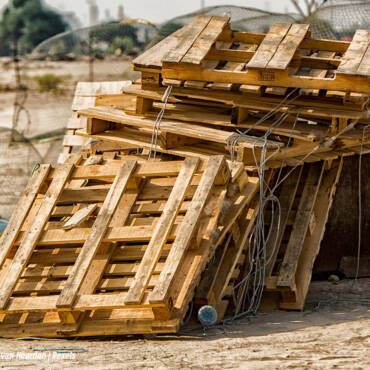
High moisture exposure causes timber to twist, swell, or warp out of its flat profile. Warped bases do not sit flush on flat floor surfaces or pallet rack beams. This instability creates dangerous wobbling when units are stacked multiple levels high.
- Dry Rot and Internal Decay
Prolonged exposure to damp environments degrades wood fibres internally, reducing tensile strength. Decayed timber appears intact visually but crumbles easily under standard industrial loads. Internal rot makes load rating calculations entirely unpredictable during active shipping cycles.
Simple Ways to Prevent Pallet Damage in Your Facility
- Forklift Driver Training Programs
Educating drivers to lift platforms completely before moving reduces dragging across concrete floors. Proper tine alignment prevents hard impacts against side stringers and front lead boards. Gentle handling practices reduce structural repair needs and lower overall equipment maintenance expenditures.
- Standardized Inspection Routines
Establishing mandatory visual checks before loading catches broken boards before they enter active production lines. Workers isolate damaged units immediately into dedicated repair zones rather than pushing them into trailers. Early sorting prevents sudden load failures inside moving transport vehicles.
- Proper Weight Distribution Practices
Training staff to stack heavier items evenly across the base prevents point-loading stresses on individual deck boards. Avoiding top-heavy configurations keeps the unit balanced during sharp forklift turns. Balanced weight distribution minimizes localized board cracking and frame twisting over time.
- Dry, Indoor Storage Conditions
Storing empty platforms inside covered warehouses shields timber from rain, snow, and extreme temperature shifts. Moisture control prevents fungal growth, wood rot, and structural warping caused by weather exposure. Dry timber maintains its original load capacity ratings much longer than weathered lumber.
- Automated Pallet Scanners
Installing optical scanning frames at automated intake points flags bent, split, or oversized boards instantly. Automated rejection systems route damaged units away from high-speed sorting conveyors before jams occur. Early detection keeps automated distribution systems running smoothly without manual interventions.
- Prompt Repair and Recycling
Partnering with external pallet management providers ensures damaged platforms are repaired or recycled promptly. Replacing individual broken deck boards restores unit integrity without requiring full unit replacement costs. Consistent recycling keeps workspace floors free from accumulated, hazardous scrap timber.
Managing supply chain efficiency requires constant attention to basic structural components like wooden platforms. Compromised timber directly causes operational loading delays, damages valuable cargo, and exposes workers to preventable workplace injuries. Establishing strict inspection habits, training forklift operators, and maintaining proper storage conditions protects operational workflows. Investing in quality platform maintenance reduces long-term operational costs and supports workplace safety standards.
For durable material handling solutions and reliable wood pallet supply, Woodbridge Pallet, contact us at (905) 856-3332.